
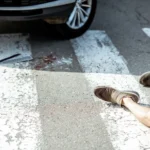
A hit-and-run accident can leave victims with more questions than answers. Whether you were driving, walking, or cycling in Long Beach, the other driver may leave the scene before you have a chance to identify the vehicle or gather important information. In many cases, victims are left wondering how they will pay for medical treatment, vehicle repairs, and other losses when the at-fault driver cannot be found.
It is common to assume that pursuing a hit and run accident claim is impossible if the driver is never identified. In reality, that is often not the case.
California law provides several potential avenues for compensation after a hit-and-run accident. Depending on the circumstances, you may be able to recover through your own insurance coverage, victim compensation programs, or a claim against the at-fault driver if they are later identified. An experienced Long Beach personal injury attorney can evaluate your options, preserve available evidence, and help you pursue every source of compensation that may be available.
Hit-and-Run Accidents in Long Beach: A Serious and Growing Problem
Long Beach, with its dense urban streets, active port traffic, and significant pedestrian and cyclist activity, has consistently ranked among California’s higher-risk cities for hit-and-run accidents. According to the California Highway Patrol’s SWITRS data, hit-and-run accidents account for a significant and growing proportion of serious injury and fatal crashes throughout Los Angeles County, with pedestrians and cyclists disproportionately represented among the victims.
California law treats hit-and-run as a serious crime. Under California Vehicle Code § 20001, a driver who is involved in an accident causing injury or death and who fails to stop, provide identification, and render reasonable assistance commits a felony, punishable by up to four years in state prison. For property-damage-only accidents, California Vehicle Code § 20002 makes hit-and-run a misdemeanor. These criminal penalties reflect California’s recognition of how serious and how common this conduct is.
Despite the criminal consequences, many hit-and-run drivers are never identified. And even when they are, they may be uninsured, underinsured, or have insufficient assets to satisfy a judgment. This is why understanding every available avenue for compensation, beginning with your own insurance policy, is essential for any hit-and-run victim in Long Beach.
Your Immediate Legal Rights After a Hit-and-Run in Long Beach
Being the victim of a hit-and-run does not mean you have no legal rights. California law protects hit-and-run victims in several important ways:
Right to Compensation Through Your Own Insurance
California requires all insurers to offer uninsured motorist (UM) coverage as part of every auto insurance policy sold in the state. Under California Insurance Code § 11580.2, UM coverage specifically includes hit-and-run accidents, treating the fleeing driver as an “uninsured motorist” for the purposes of your claim. If you purchased UM coverage, which most California drivers do, even if they do not realize it, you can file a claim with your own insurer for your injuries, lost wages, and other damages, regardless of whether the at-fault driver is ever identified.
Right to Pursue the Identified Driver
Hit-and-run drivers are identified more often than victims expect. Surveillance cameras are ubiquitous in Long Beach, at businesses, traffic intersections, parking structures, and residences, and witnesses who saw the vehicle or captured footage on dashcams increasingly come forward. The Long Beach Police Department takes hit-and-run investigations seriously, particularly when injuries are involved. If the driver is identified, whether through police investigation, witness accounts, or your attorney’s own investigation, a standard personal injury claim against that driver and their insurer becomes available.
Right to File a California Victims Compensation Claim
If you were the victim of a hit-and-run accident in Long Beach and the driver committed a crime in doing so, which California law presumes when a driver flees an injury accident, you may be eligible for compensation through the California Victim Compensation Board (CalVCB). CalVCB can provide reimbursement for medical expenses, mental health treatment, lost income, and certain other costs related to the crime. CalVCB is not a substitute for a personal injury claim, but can bridge financial gaps while your insurance claim or lawsuit is pending.
Uninsured Motorist Coverage: Your Primary Avenue for Compensation
For most Long Beach hit-and-run victims, uninsured motorist coverage is the primary and most accessible source of compensation, particularly when the at-fault driver is never identified. Understanding how this coverage works is critical.
What UM Coverage Covers in a Hit-and-Run
Your uninsured motorist coverage can compensate you for the same categories of damages you would seek from the at-fault driver if they had insurance and were identified:
- Medical expenses, past and future
- Lost wages and reduced earning capacity
- Pain and suffering
- Emotional distress
- Loss of enjoyment of life
The Physical Contact Requirement
California’s UM coverage for hit-and-run accidents has an important limitation: most policies require that there be actual physical contact between your vehicle (or your body) and the hit-and-run vehicle. This “physical contact requirement” is designed to prevent fraudulent claims where someone alleges a phantom vehicle caused them to crash without any actual contact occurring. If the hit-and-run driver made direct contact with your vehicle or your person, this requirement is almost certainly satisfied. If you were forced off the road or caused to crash by a vehicle that never actually touched you, the situation is more complex; consult your attorney immediately.
Underinsured Motorist Coverage
If the hit-and-run driver is eventually identified and has some insurance, but not enough to fully cover your damages, your underinsured motorist (UIM) coverage can make up the difference, up to your policy limits. In serious injury cases where damages exceed the identified driver’s policy limits, UIM coverage can be the difference between partial and full recovery.
Stacking Your Coverage
If you own multiple vehicles insured under separate policies, or if other household members have their own policies, California law, in some circumstances, allows “stacking” of UM/UIM coverage across multiple policies. An experienced personal injury attorney will review all available policies to determine whether stacking is permitted and whether it increases your available coverage.
What to Do Immediately After a Long Beach Hit-and-Run
The steps you take in the minutes immediately following a hit-and-run accident can dramatically affect both your physical recovery and your legal claim. Act on these steps in order of priority:
Step 1: Call 911 Immediately
Always call 911 after a hit-and-run, regardless of how minor your injuries appear. A police report creates an official record of the incident, documents the description of the fleeing vehicle, and initiates the law enforcement investigation that may eventually identify the driver. Under California’s UM coverage rules, most policies require that a hit-and-run accident be reported to law enforcement promptly as a condition of coverage. Do not skip this step.
Step 2: Seek Medical Attention the Same Day
Even if you feel physically intact, seek medical evaluation on the day of the accident. Hit-and-run accidents frequently produce injuries, including spinal injuries, concussions, and soft tissue damage, that are masked by adrenaline and do not fully manifest until hours or days later. Same-day medical records tie your injuries directly to the accident and prevent the insurer from arguing that a gap in treatment means the crash did not cause serious harm.
Step 3: Document Everything at the Scene
Before anything is moved or cleared, use your phone to capture as much information as possible:
- The direction the fleeing vehicle was traveling, and any part of its license plate you were able to see
- The make, model, color, and any distinguishing features of the vehicle
- The damage to your own vehicle or property
- Your visible injuries
- The location, street names, landmarks, and the direction of travel
- Any surveillance cameras visible on nearby businesses or intersections
Step 4: Canvass for Witnesses and Camera Footage
Ask bystanders whether they saw the accident or the vehicle. Collect names and contact information from anyone willing to provide it. Note the locations of every surveillance camera visible from the accident scene, businesses, ATMs, parking structures, doorbell cameras on nearby residences, and traffic intersection cameras. Your attorney can send immediate preservation demands to these businesses before footage is overwritten, typically within 24 to 72 hours.
Step 5: Report the Accident to Your Insurance Company
Notify your insurance company of the hit-and-run as soon as possible. Most policies require prompt reporting of accidents as a condition of coverage. When reporting, describe what happened factually and accurately, but do not speculate about fault or provide a recorded statement without first consulting a personal injury attorney. Simply report that you were involved in a hit-and-run accident, provide the basic facts, and state that you are seeking medical evaluation.
Step 6: Contact a Long Beach Personal Injury Attorney
Retain a personal injury attorney as early as possible after a hit-and-run. Time-sensitive evidence, surveillance footage, witness memories, and physical evidence at the scene disappear quickly. Your attorney can immediately issue formal preservation demands, begin an independent investigation, and ensure that your UM claim is filed correctly and completely. An attorney also protects you from the insurer’s own claims adjusters, who will be working to minimize your payout from the moment the claim is filed.
The Investigation: Identifying the Hit-and-Run Driver
Hit-and-run drivers are caught more often than victims expect, particularly in Long Beach, where surveillance infrastructure is extensive, and law enforcement takes these cases seriously. Your attorney and law enforcement may use the following to identify the fleeing driver:
- Surveillance footage: Traffic cameras, business security systems, residential doorbell cameras, and dashcams from other vehicles can capture the fleeing vehicle, including license plates and the driver’s face in some cases
- Witness accounts: Bystanders who saw the vehicle, the direction it traveled, or partial plate information can provide critical investigative leads
- Vehicle debris: Vehicles that cause accidents typically leave behind paint transfer, glass fragments, or trim pieces that can help identify the make and model of the vehicle, and in some cases, the specific vehicle
- Social media and community networks: Platforms where witnesses share what they saw, or where the damaged vehicle may be spotted after the fact, have led to hit-and-run identifications in numerous Southern California cases
- LBPD investigation: The Long Beach Police Department’s traffic division investigates injury hit-and-run accidents with significant resources, including access to regional surveillance networks and license plate reader databases
Even if you believe the driver will never be found, do not abandon the investigation. Pursuing identification vigorously, through both law enforcement and your attorney’s own efforts, significantly improves the odds of recovery and may allow a standard personal injury claim to be filed if the driver is eventually identified.
Filing the UM Claim: What Your Insurer Will Require
When you file a hit and run accident claim under your UM coverage, your insurer will conduct its own investigation and will typically require:
- A copy of the police report documenting the hit-and-run
- A prompt, written notice of the claim (most policies require this within 30 days of the accident)
- Documentation that you reported the accident to law enforcement
- Medical records and bills documenting your injuries and treatment
- Evidence of lost wages if you are claiming lost income
- A description of the fleeing vehicle and any identifying information obtained at the scene
Your insurer may also request to conduct an Examination Under Oath (EUO), a formal sworn statement similar to a deposition, as part of its investigation of the UM claim. You should not participate in an EUO without your attorney present. An attorney will prepare you for this process, protect you from questions designed to minimize your claim, and ensure your rights are protected throughout.
When Your UM Insurer Acts in Bad Faith
Insurance companies handling UM claims, even claims filed by their own policyholders, have been known to dispute valid hit-and-run claims, demand unreasonable proof of physical contact, or make unreasonably low settlement offers. Under California’s insurance bad faith doctrine, your insurer owes you a duty of good faith and fair dealing when handling your UM claim.
Unreasonable denial, delay, or underpayment of a legitimate UM claim can give rise to a bad faith lawsuit against your own insurer, with potential recovery beyond the original policy limits.
If your UM claim has been denied or your insurer is offering far less than your claim is worth, consult a personal injury attorney immediately. Bad faith claims against insurers are a distinct and important area of California law that can significantly change the financial outcome of your case.
Common Injuries in Long Beach Hit-and-Run Accidents
Hit-and-run accidents occur at a wide range of speeds and in a variety of contexts, including vehicle-on-vehicle collisions, pedestrian strikes, and cyclist impacts. Common injuries include:
- Traumatic brain injuries and concussions: Particularly common in pedestrian and cyclist hit-and-runs where the victim has no protective structure around them
- Spinal cord injuries: Impact forces in hit-and-run accidents can cause disc herniations, vertebral fractures, and, in the most severe cases, permanent paralysis
- Broken bones: Legs, hips, arms, and ribs are commonly fractured in pedestrian and vehicle hit-and-run impacts
- Road rash and lacerations: Cyclists and pedestrians thrown to the pavement frequently sustain severe skin abrasions and deep lacerations requiring surgical care
- Whiplash and soft tissue injuries: Particularly common in rear-end hit-and-run vehicle collisions
- Internal injuries: Blunt trauma from vehicle impacts can cause organ damage and internal bleeding that may not be immediately apparent
- Psychological trauma: PTSD, anxiety, depression, and driving or pedestrian phobia are documented consequences of hit-and-run accidents, particularly for victims who were struck without warning
What Compensation Can Hit-and-Run Victims Recover in California?
Depending on the circumstances of your case, whether the driver is identified, your UM coverage limits, and the severity of your injuries, a successful hit and run accident claim in California may recover:
- Medical expenses: Emergency care, hospitalization, surgery, specialist visits, physical therapy, and future medical costs for ongoing conditions
- Lost wages: Income lost during recovery, and future earning capacity if injuries cause lasting professional limitations
- Pain and suffering: Compensation for physical pain, emotional distress, and the overall impact of your injuries on daily life
- Property damage: Repair or replacement of your vehicle and personal property damaged in the accident
- Loss of enjoyment of life: Compensation for activities no longer accessible due to your injuries
- Wrongful death damages: When a hit-and-run accident is fatal, surviving family members may pursue wrongful death claims through the UM coverage process or against an identified driver
Frequently Asked Questions About Hit-and-Run Accident Claims in California
Q: Can I get compensation if the hit-and-run driver is never found?
Yes. If you have uninsured motorist coverage on your auto policy, which California law requires insurers to offer with every policy sold in the state, you can file a UM claim with your own insurer regardless of whether the at-fault driver is ever identified. The UM claim treats the unknown driver as an uninsured motorist and compensates you for your injuries and other losses up to your policy limits. You may also be eligible for the California Victim Compensation Board program.
Q: What if I was hit as a pedestrian or cyclist? Can I still file a UM claim?
Yes. California’s UM coverage extends to pedestrians and cyclists who are struck by an uninsured or unidentified hit-and-run driver, not just vehicle occupants. If you do not own a vehicle yourself, you may be covered under a household member’s auto policy. You may also have access to UM coverage through a vehicle you were near at the time of the accident in some circumstances. An attorney can review all available policies to identify coverage options.
Q: The police found the hit-and-run driver, but they have no insurance. What now?
When the driver is identified but uninsured, your own UM coverage is still your primary avenue for compensation, and a lawsuit against the driver personally may also be an option, depending on their assets. An experienced attorney will evaluate both paths and advise you on the most effective strategy for maximizing your recovery given the specific facts of your case.
Q: My insurance company is disputing my hit-and-run UM claim. What can I do?
Contact a personal injury attorney immediately. California’s insurance bad faith doctrine requires your insurer to handle your UM claim in good faith, investigating it thoroughly, responding within required timeframes, and offering reasonable compensation when the claim is valid. If your insurer is disputing a legitimate claim, an attorney can challenge the denial through an internal appeal, a California Department of Insurance complaint, or a bad-faith lawsuit if the conduct is sufficiently unreasonable.
Q: I did not catch any part of the license plate. Does that hurt my claim?
Not necessarily. While a partial plate number is helpful to the investigation, it is not required to file a UM claim or to pursue compensation. The physical contact requirement, that the hit-and-run vehicle actually made contact with your vehicle or your person, is the primary condition for most UM claims. Your description of the vehicle, witness accounts, surveillance footage, and vehicle debris left at the scene can all contribute to both the investigation and the claim without a license plate number.
Q: How long does a hit-and-run UM claim take to resolve in California?
The timeline depends on the severity of your injuries, the complexity of the claim, and whether the insurer disputes coverage or liability. Simple UM claims with clear facts and minor injuries may resolve within a few months. Serious injury cases, particularly those requiring surgery, extended rehabilitation, or expert testimony about future medical costs, may take 12 to 24 months or longer. If UM arbitration is required under your policy, that process adds additional time but often produces a more thorough evaluation of the claim’s true value.
How an Experienced Long Beach Attorney Handles Hit-and-Run Claims
Hit-and-run accident claims require a combination of skills that not every personal injury attorney possesses: investigative persistence, insurance law expertise, and the willingness to fight both the criminal case’s implications and your own insurer’s claims process simultaneously.
Attorney Michael Waks and his team:
- Issue immediate preservation demands to businesses and traffic systems for surveillance footage before it is overwritten
- Conduct an independent investigation to identify the fleeing driver, working alongside law enforcement and using available investigative resources
- Review all applicable insurance policies, yours, household members’, and any other potentially applicable coverage, to maximize available UM/UIM limits
- File the UM claim correctly and completely, meeting all policy notice requirements and documentation standards
- Handle all communications with your insurer, preventing the recorded statements and claims adjuster interactions that can undermine your claim
- Evaluate whether UM arbitration or litigation is the most effective path for your specific claim
- Fight for the full value of your injuries, including future medical costs, lost earning capacity, pain and suffering, and emotional distress
- Pursue bad faith remedies against your insurer if the UM claim is handled unreasonably
Victim of a Hit-and-Run in Long Beach? Contact Michael Waks Today.
Being left alone at the scene of an accident by the driver who caused it is a profound injustice, and one that California law takes seriously, both criminally and civilly. You have rights. You have options. And the fact that the driver fled does not mean you have no path to the compensation your injuries demand.
The Law Offices of Michael Waks has spent decades fighting for hit-and-run victims and seriously injured accident survivors throughout Long Beach and Southern California. We move quickly, because in hit-and-run cases, the evidence that identifies the driver and supports your claim is most accessible in the immediate aftermath of the accident.


- Who Is Liable for Injuries on Private Property in California? - August 27, 2026
- What Are Signs of Nerve Damage After Dog Bites in SoCal? - August 26, 2026
- Who Is Liable for Electrical Burn Injuries on CA Job Sites? - August 20, 2026